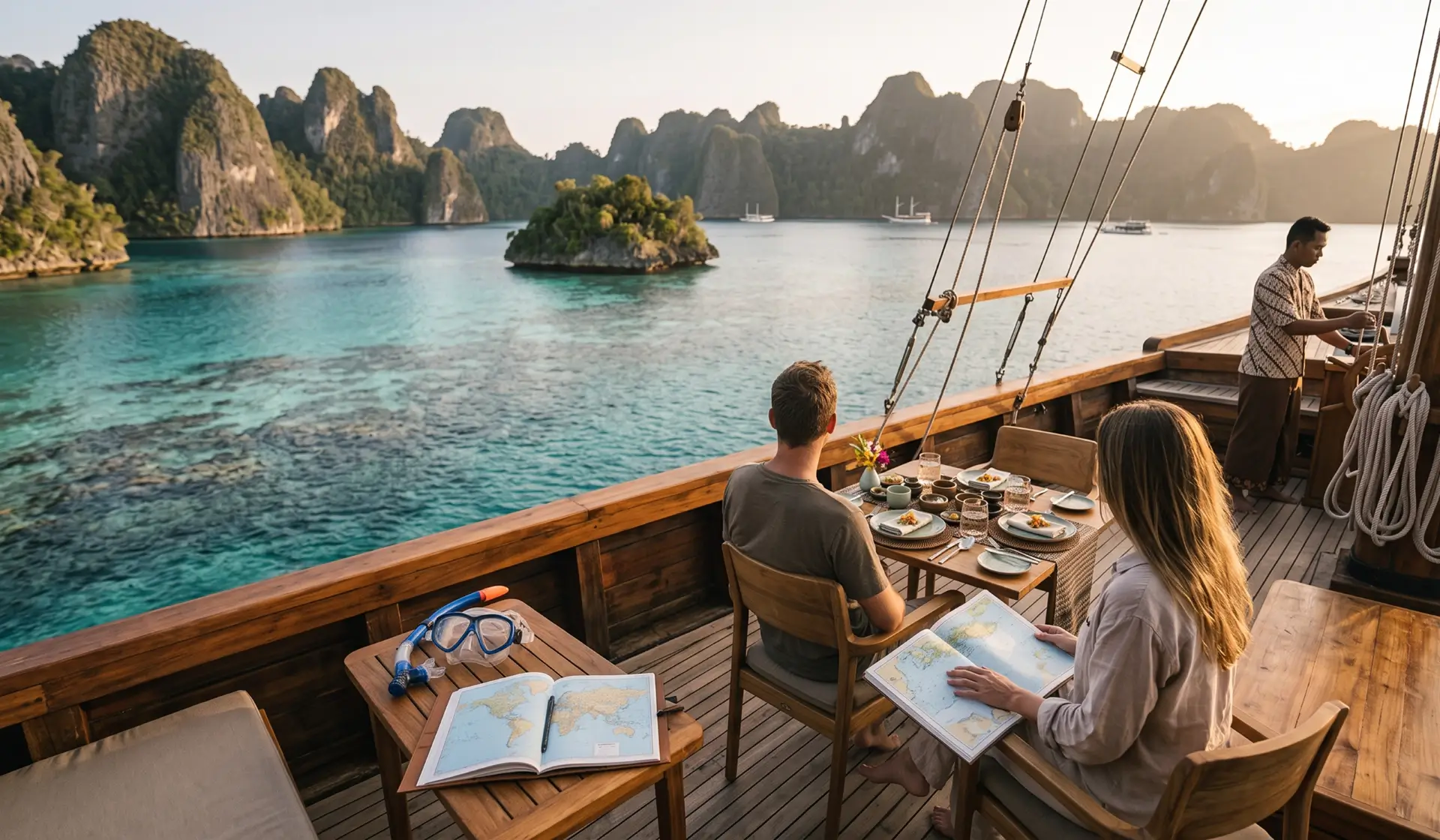
Yacht vs Private villa – Once a traveler decides they want privacy over a standard resort stay, the next question is usually which form of private travel actually delivers it. The two most common options in Indonesia are a private villa and a private yacht charter, and while both promise seclusion, they achieve it in very different ways.
What Makes a Travel Experience Truly Private?
A truly private travel experience is one in which no part of the trip, accommodation, staff, transportation, or itinerary, is shared with anyone outside the traveling party. This is a stricter definition than most resorts or even many “private villa” listings can meet, since a villa is often one private structure within a larger staffed compound or estate.
Private Villas: Pros and Limitations
Yacht vs Private villa – Private villas offer genuine privacy within their walls. Guests typically have a dedicated pool, garden, and living space, along with private staff.
The limitations tend to show up around the edges. Villas are fixed to one location, so any change of scenery means leaving the property entirely. Staff often live off site and arrive on a schedule, meaning the property is not always exclusively occupied by guests. And in popular areas like Seminyak or Uluwatu, neighboring villas, road noise, and nearby developments can chip away at the sense of total seclusion.
Private Yacht Charters: Pros and Limitations
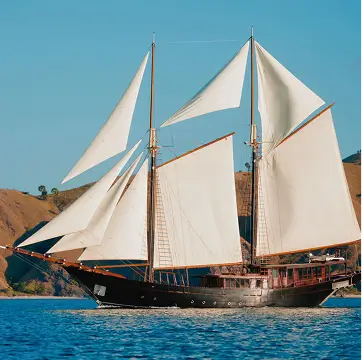
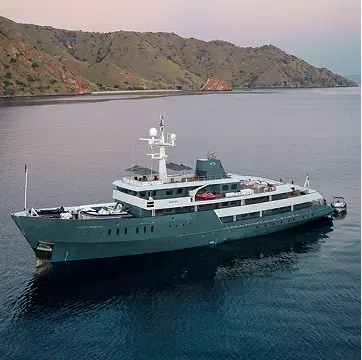
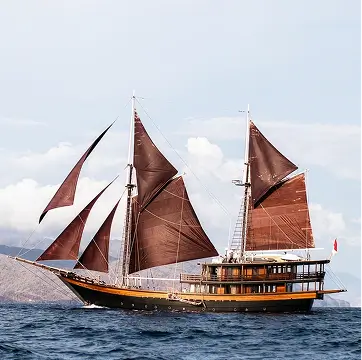
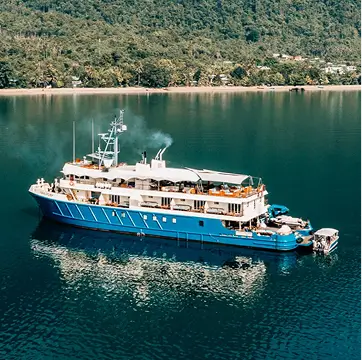
A private yacht charter solves the fixed-location problem by design. The entire vessel, from deck to cabins to dining area, belongs to one group for the full duration of the trip, and the crew works and often sleeps aboard, dedicated entirely to that one group rather than rotating between properties or guests.
Yacht vs Private villa – Because the yacht itself is the accommodation, guests can move between islands, bays, and dive sites daily, waking up somewhere new without ever leaving their private space. The tradeoff is cost and structure. Yacht charters typically involve a higher nightly investment than a villa, and life aboard requires a degree of comfort with a smaller, self-contained environment.
Side-by-Side: Privacy, Flexibility, and Experience
| Factor | Private Villa | Private Yacht Charter |
|---|---|---|
| Location | Fixed | Changes daily |
| Neighboring guests | Possible nearby | None, closed guest list |
| Staff exclusivity | Often shared or off-site | Fully dedicated, onboard |
| Itinerary flexibility | Limited to property and local area | Full archipelago access |
| Best suited for | Travelers who prefer a single base | Travelers who want to explore multiple destinations privately |
Which One Is Right for You?
Yacht vs Private villa – If the goal is a relaxed base to return to each evening, with occasional day trips, a private villa can deliver excellent privacy without the logistics of life aboard a vessel. But for travelers who want to see multiple destinations, such as Komodo, Raja Ampat, or the Banda Islands, without sacrificing seclusion at any point along the way, a private yacht charter offers a level of continuous privacy that a fixed property cannot match.
Frequently asked questions
Is a private yacht charter more private than a villa?
In most cases, yes. A yacht charter eliminates neighboring guests, shared staff, and fixed-location exposure entirely, since the vessel and crew are dedicated to one group for the full trip.
Can you combine a yacht charter with a villa stay?
Many travelers do combine both, using a villa stay in Bali as a base before or after a multi-day yacht charter to other islands, giving them the best of both experiences.
How many guests can a private yacht charter accommodate?
Capacity varies by vessel, with yachts ranging from smaller charters suited to couples or small families up to larger vessels able to host bigger groups, so itineraries are typically matched to guest count during planning.
Find the Right Fit for Your Trip
Yacht vs Private villa – Whether total seclusion means a single beautiful base or a private journey across multiple islands, the right choice comes down to how you want to spend your days. If continuous privacy and the freedom to explore more of Indonesia sound appealing, reach out to start planning a private yacht charter suited to your group.